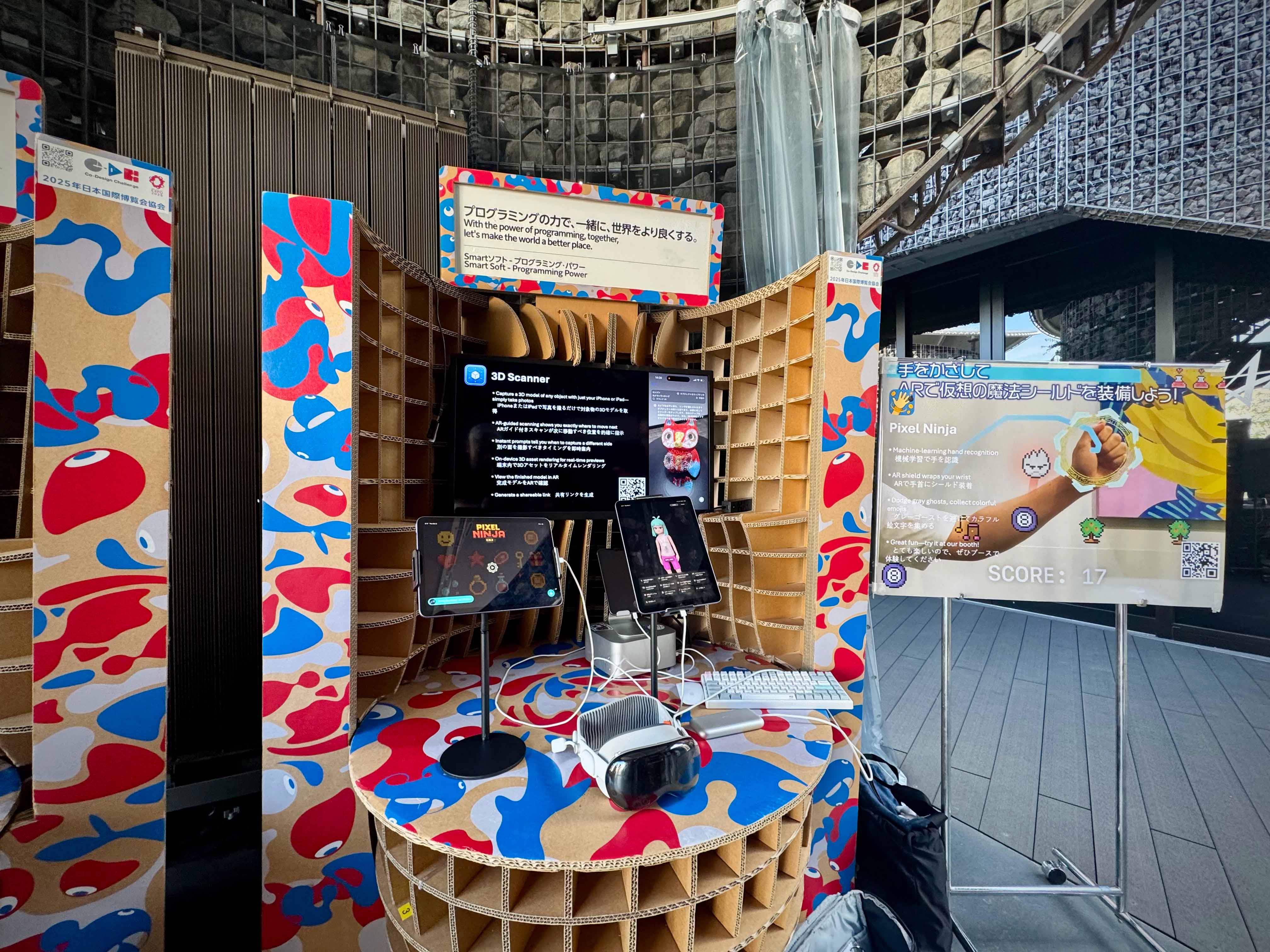
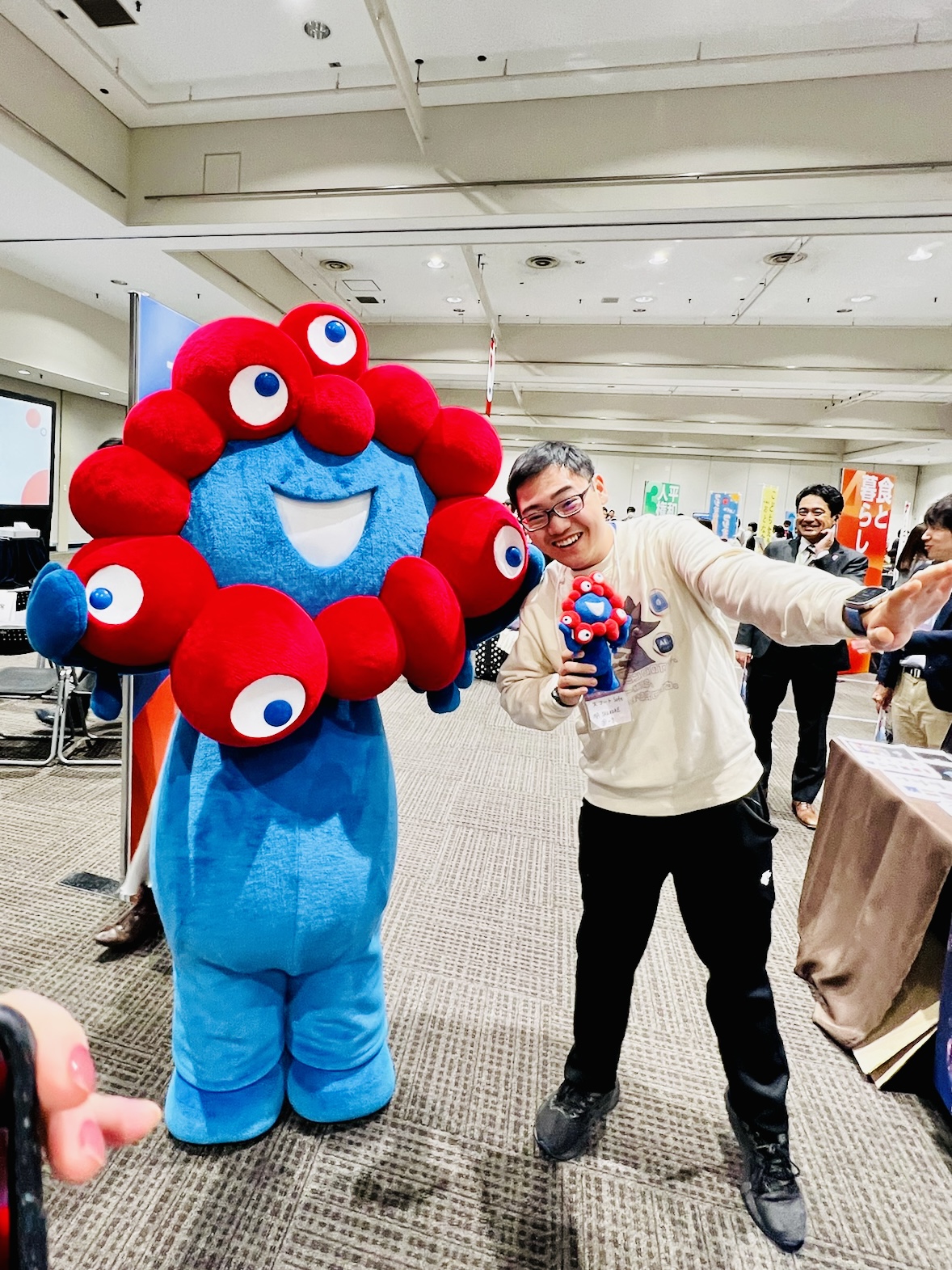
Osaka World Expo 2025
Programming power, live at Osaka World Expo 2025.
I turned one compact booth into a hands-on stage for on-device AI, AR play, 3D capture, and Apple Vision Pro. People could walk up, try everything immediately, and see practical software feel playful, human, and real.
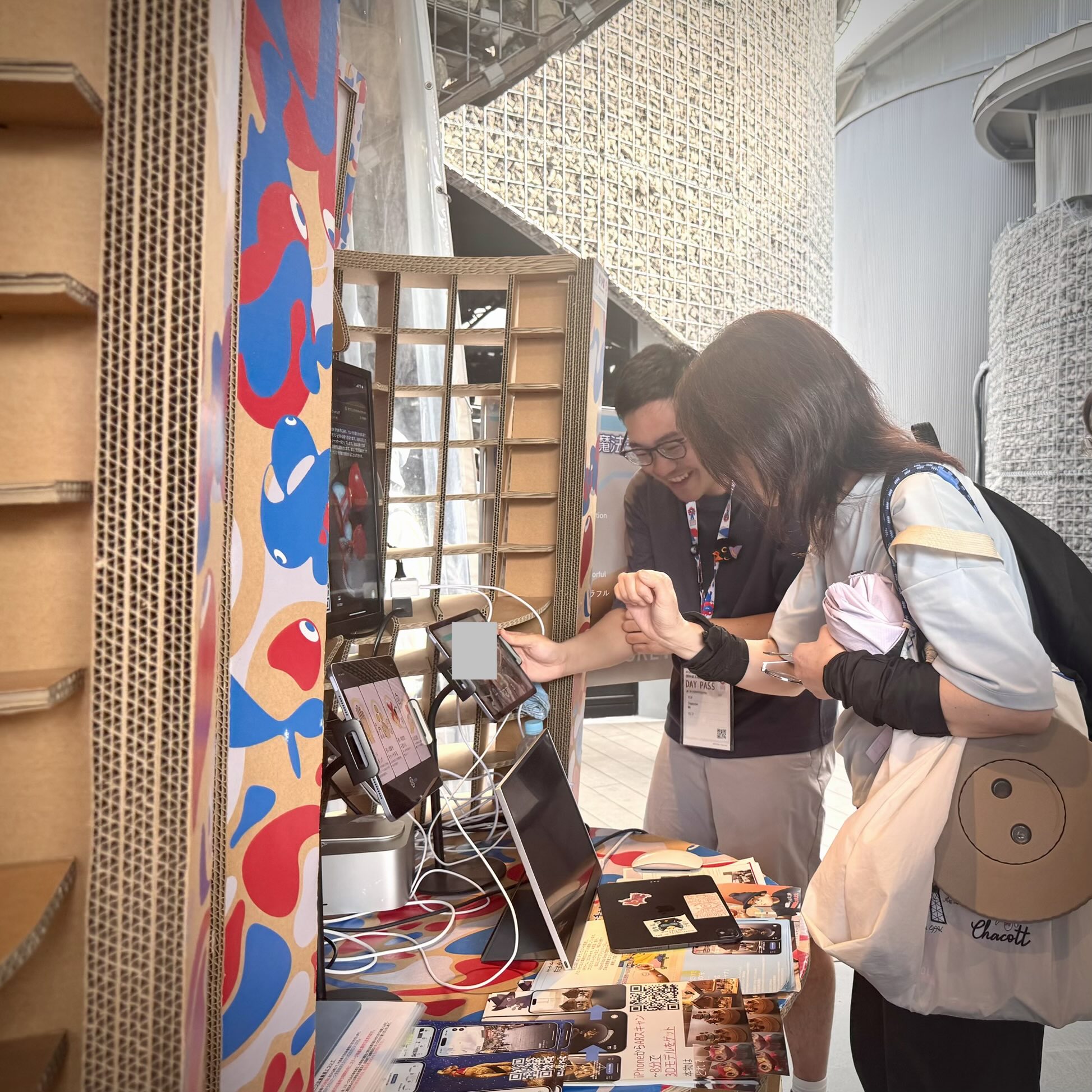
Visitors
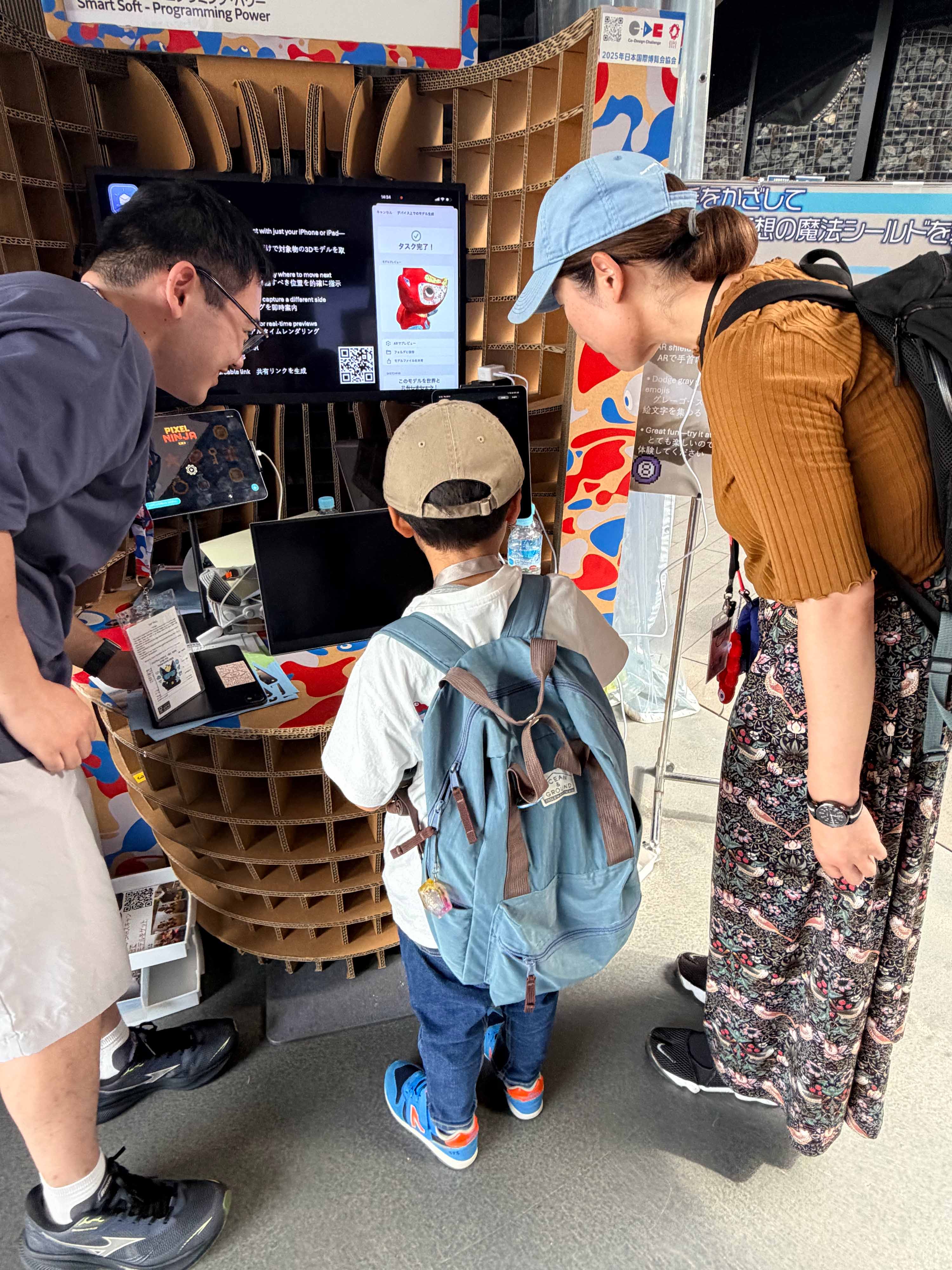
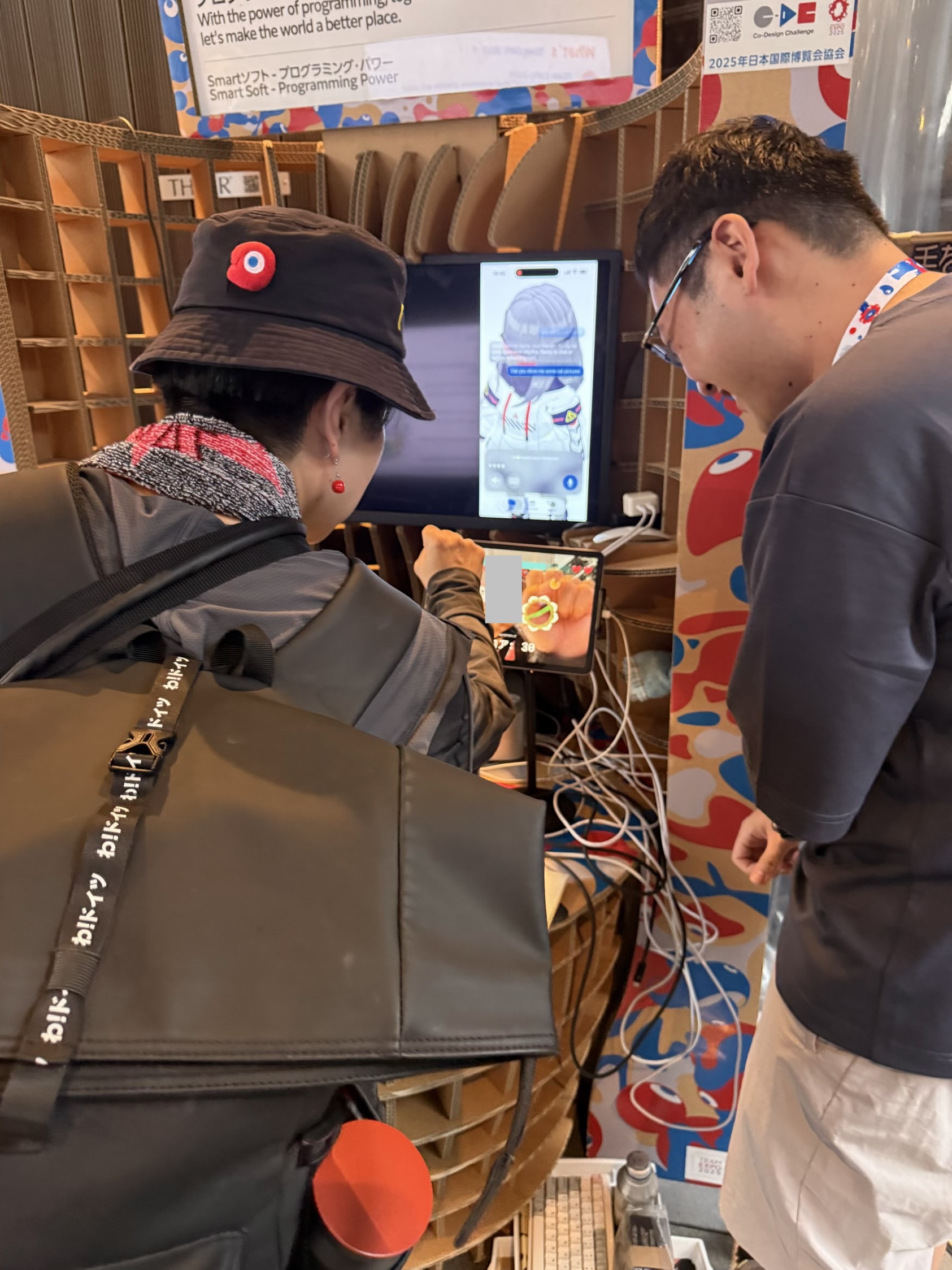
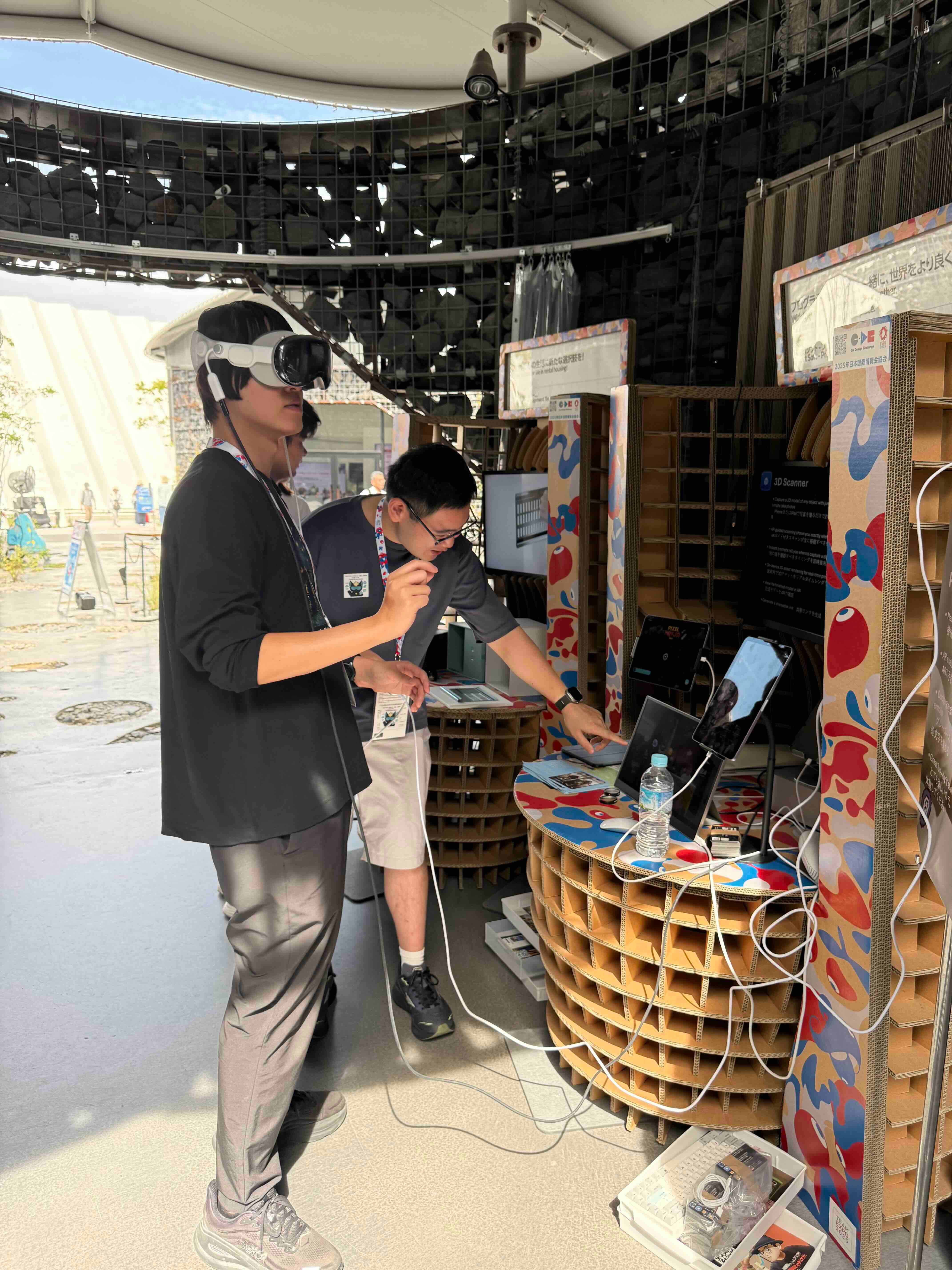
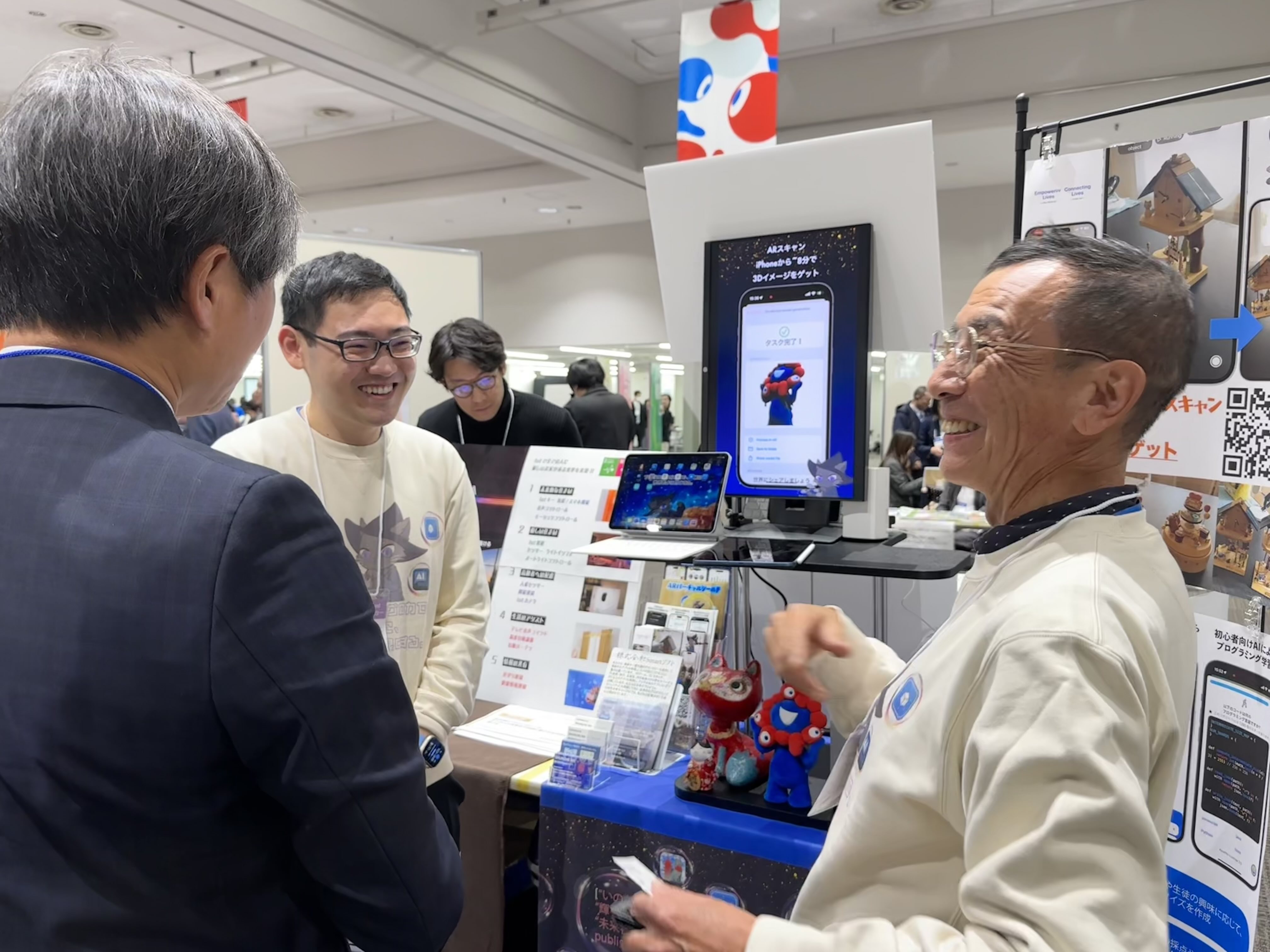
Visitors understood the work by trying it, not just reading about it.
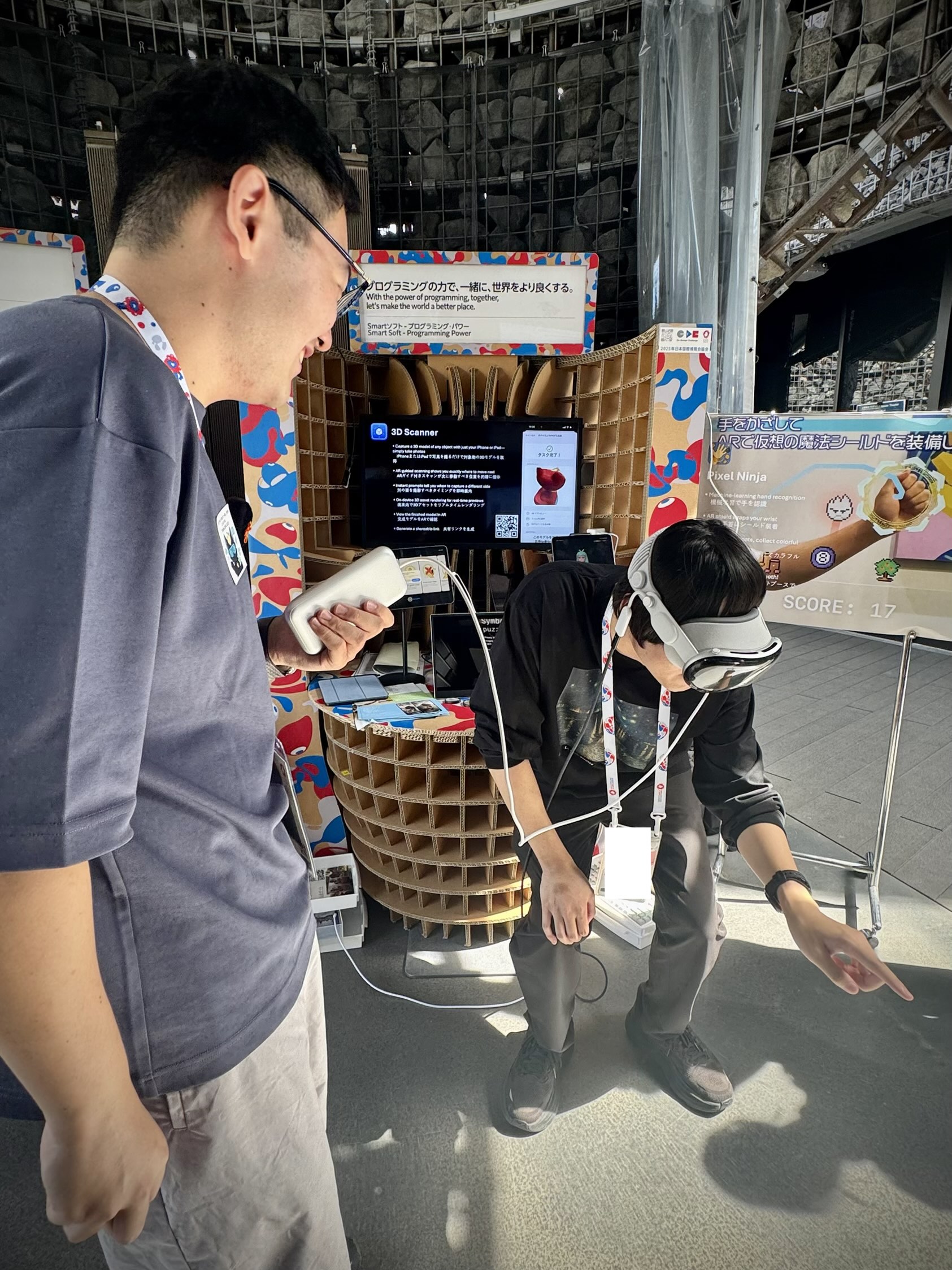
The booth mixed fast-play interactions, practical software demos, and direct one-on-one conversations. People stopped, watched, tried the experience, and moved naturally from playful curiosity into questions about product thinking, privacy, translation, spatial interfaces, and shipping real apps.
Stage
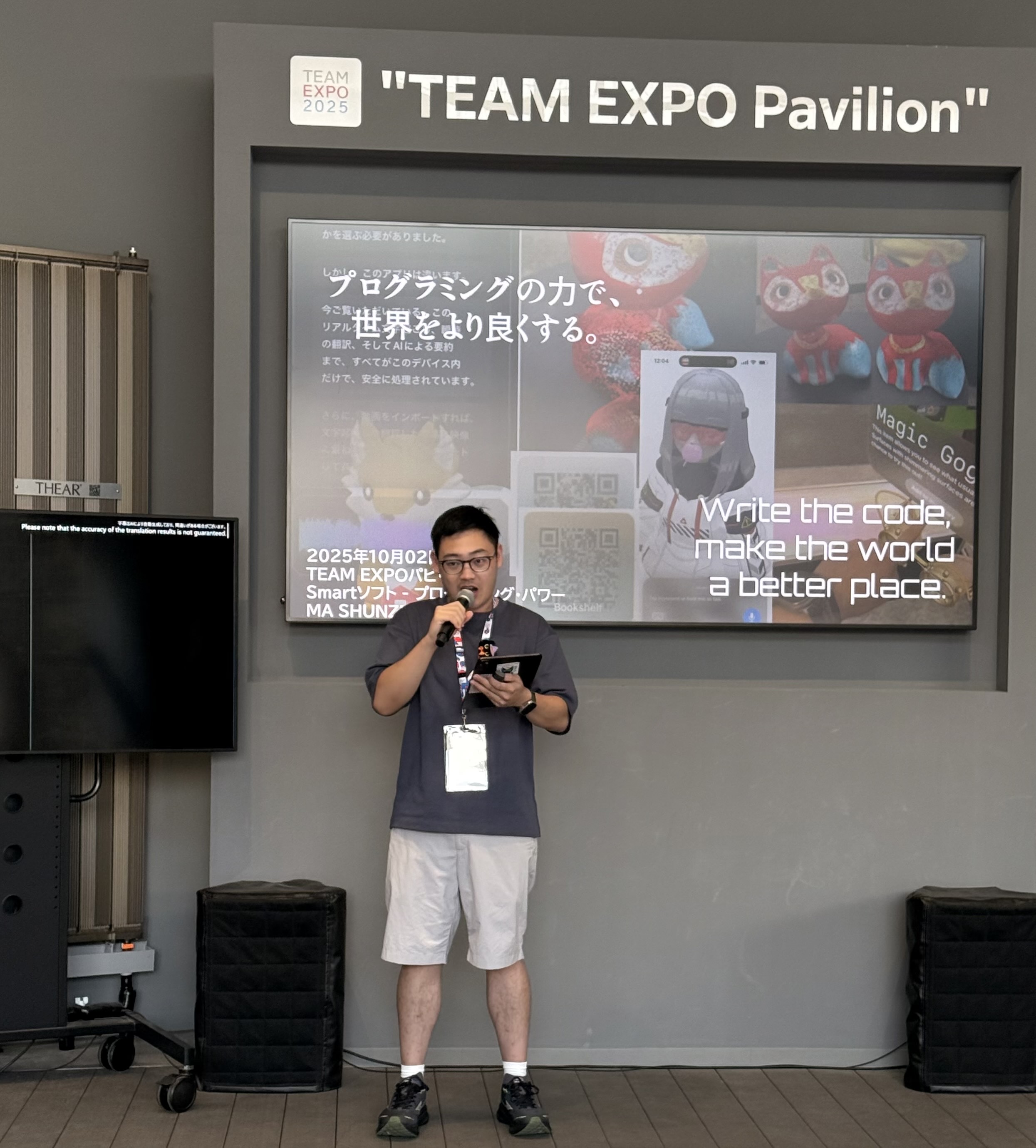
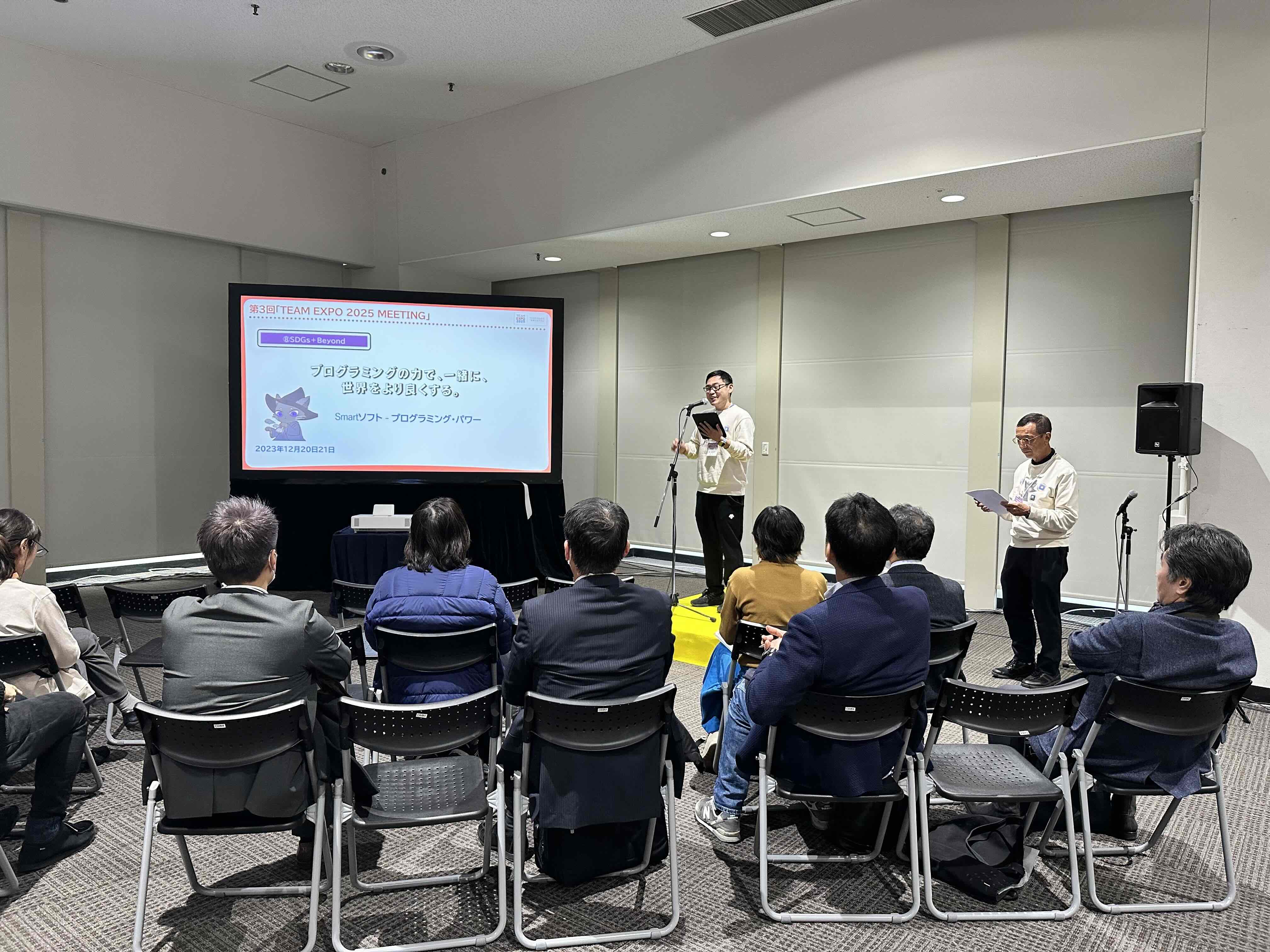
The booth story also had a public stage moment.
The Smart Soft - Programming Power presentation turned the same booth idea into a clearer public message: make advanced technology feel approachable, playful, and useful through software people can actually try.
- The stage gave the project a public framing before visitors walked over to the booth.
- The presentation connected the demos back to programming, translation, spatial computing, and practical product work.
- The talk and the booth reinforced the same idea from two angles: explain it clearly, then let people try it themselves.
Expo meetings
The Expo story started in meetings before the booth opened.
Before the public showcase, I introduced the concept in Expo-related meetings and preparation sessions. The framing was direct: use programming, product design, and shipping software to make advanced technology feel more approachable, more playful, and more useful.
Those earlier sessions helped sharpen the booth message, the bilingual presentation style, and the mix of demos I eventually brought onto the floor. The result was not a random collection of demos, but a clearer picture of what I wanted to show.
Programming power
Bilingual communication
Product-first demos
Wrap up
One small Expo booth, a clear picture of what I build.
The Osaka World Expo appearance brought together the things I care about most: practical apps, spatial experiments, direct human interaction, and a willingness to make advanced technology feel friendly instead of distant.